What the Twin Falls In-N-Out and the Boise Mall Shootings Can Teach Us
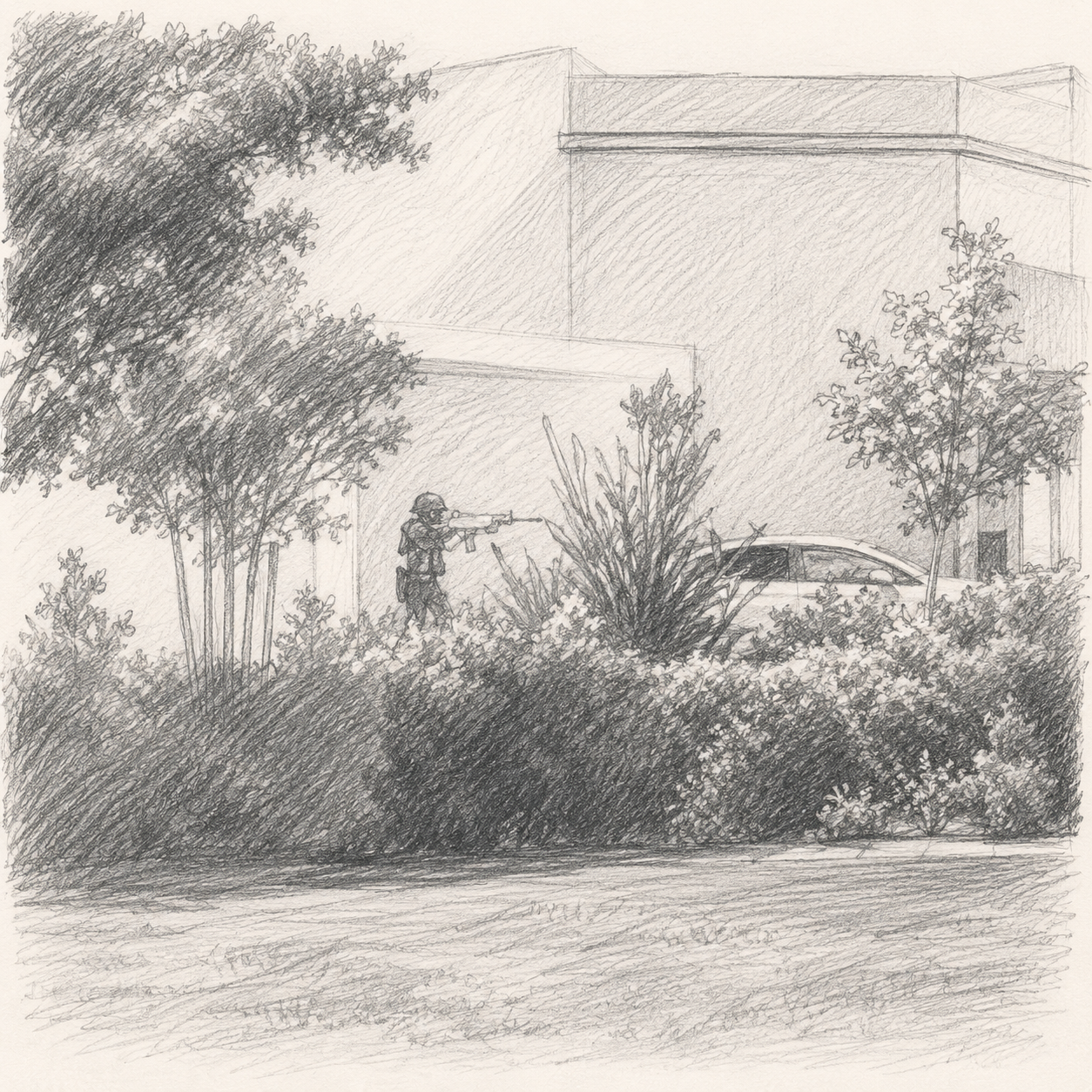
A peaceful day can turn into a nightmare in a matter of seconds. That is what happened to those involved in both of these shootings.
A routine trip to a restaurant or the mall can suddenly become an emergency, leaving bystanders with little time to understand what is happening, plot a course of action, and respond to the situation to protect themselves or others.
So, what lessons can we learn in order to survive a mass shooting, protect ourselves and our loved ones, render aid to victims and potentially engage the shooter. Before we talk about the lessons learned you can view the 2 shootings as we extend sincere condolences to the families and victims of the shooters.
Watch the video from the Twin Falls police, sheriff and FBI (scrub to 13:20 for the incident, about 9 min long): Twin Falls In-N-Out Shooting: Videos show heroics at scene | Full Friday News Conference
And the Boise Mall Shooting: Boise mall shooter wandered, ate at food court before shooting, killing two people
In order to respond appropriately to a deadly threat you need to first have a plan. Remember you’ll never live up to your “potential”, but simply fall back to your training. The FBI and DHS (Department of Homeland Security) have come up with a plan to help us survive.
Watch here: Run, Hide, Fight: FBI video
So what is the goal? Survive, Help others escape, Stop preventable bleeding, Help police ID the threat. Potentially engage the shooter, more on this later.
Action plan: RUN, HIDE, FIGHT
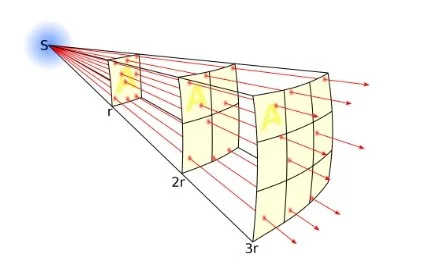
Our first course of action should be to run. By running away from the active shooting scene you greatly decrease the chances of being hit by an aimed or errant bullet from the gunman. There is an Inverse-Square Law that states if you double the distance between you and a shooter, you are now four times harder to hit. Triple the ditance and you are nine times harder to hit.
When you make the decision to run: leave your possessions behind, look for exits (better yet, memorize exits as you enter a building), drag your loved ones and others with you, and minimize your profile as you make your way to the exit. Squat or crawl if you need to. When you get to safety call 9-1-1 and if you see law enforcement show empty hands.
Hiding is the next best course of action when running is not possible. Find a secure room or hidden space out of the gunman’s view. If possible lock and barricade the door to prevent the shooter’s entry. Silence cell phones and notifications. Remain quiet and stay hidden behind solid objects and out of view. At the Idaho Falls visitors center 3 people hid behind a display and the shooter did not see them. In the case of the Boise Mall, ducking behind clothing racks so the shooter can’t see you and making your way to the exit was a great strategy.
As a last resort when running or hiding is not possible and you are at immediate threat, fight the shooter. Use defensive actions that will disrupt or incapacitate the shooter. Use whatever means and improved weapons you can find. In a bar, a pool cue, bar stool, or beer mug can all be used to bludgeon the threat. Everything around you can be used as a weapon. If others are present, a mass attack on the shooter can overwhelm and neutralize him.
Carrying a Firearm is Not the Same as Being Prepared
Owning and carrying a firearm for self-defense comes with significant responsibility. A person may be legally permitted to carry a firearm, but still be unprepared to make sound decisions during a dynamic critical incident.
Real-world defensive situations are nothing like standing at a flat range shooting a paper target. There might be noise, confusion, people running in different directions, limited visibility, adrenaline, and confusing information. You may not know who the mass shooter is or if there is more than one. You may not know their exact location.
Good training should go much further than simply learning how to fire a gun. It should include developing safe gun handling skills under duress, decision-making, and developing open skills that allow you to respond to an evolving situation appropriately.
The goal isn’t to turn someone into a person looking for a fight, but to make a responsible firearm owner that can make good decisions under extreme stress which can include engaging the threat, but also backing off if the gunman can’t be positively identified or found.
Sometimes Disrupting the Threat is Enough
At the Twin Falls shooting an off-duty officer, Steve McClain, and an armed civilian, Jordan Salinas, both engaged the shooter firing rounds at the gunman driving him away from the In-N-Out where the shooting started; undoubtedly saving more lives.
Self-defense is about protecting lives; not necessarily winning the confrontation. Once the immediate threat is disrupted, continuing to pursue a dangerous situation can introduce additional risks to you, bystanders, and responding law enforcement.
A defensive mindset should include knowing when the immediate threat is changed and when your role needs to change with it.
Do What You Can/Do What You Must; Fuc% the Rules
When the Twin Falls shooter was shooting through the payment window, pick-up window, and the parked car, many people were in cars waiting their turn at the drive through who just sat and watched.
This reminds me of Colonel Cooper's Color Codes of Awareness, specifically Code Black in this case. Code Black is one of catastrophic breakdown mentally and physically due to panic, stress or hysteria. When there is a need for immediate action the person is stuck. If you don’t have a plan, you’ve planned to fail.
Here is a full explanation of the Color Codes of Awareness: The Color Codes of Awareness
A couple of options available to those in parked cars would be to drive over the curb, through the landscaping to exit to the road. When lives are at stake the rules of the road and destruction of property go out the window. Another option is to exit your vehicle and run in the opposite direction. You must not stop in disbelief that the scenario is unfolding before you; you must act.
When Police Arrive, Your Role Will Change
When law enforcement arrives on an active shooter scene, officers may have limited information, they will be under stress with an adrenaline dump, and will need to identify everybody at the scene as they take control.
From their perspective, an armed person can be difficult to distinguish from an active threat. At the Twin Falls incident, the armed individuals reportedly put their firearms away or down before law enforcement arrived. Wise move as you don’t want to add to the confusion or become a statistic.
Responsible firearm owners need to understand the importance of following law enforcement instructions and transition from defender to compliant witness once law enforcement arrives and/or the threat has ended.
Responsible Self-Defense Starts Before an Emergency
Both the Twin Falls and Boise Mall shooting remind us that emergencies rarely happen at a convenient time. You don’t get to choose the environment, time of day, the people you are with, or circumstances when it will happen.
But, you can choose whether or not you will be prepared.
Self-defense is more than just having a firearm on you. It involves awareness, training, judgement, and understanding your responsibilities. You are responsible for every round that leaves your firearm until it comes to a complete stop. Can you hit your target from 5 yards? How about 50 yards?
Train like your life depends upon it, or train like your family's lives depend on it.
Preparedness isn’t about expecting the worst. It’s about being responsible enough to prepare for it.
Ready to Build Your Foundation?
If you're looking for self-defense classes in Idaho, non-lethal self-defense, or non-firearms weapons training consider starting with professional instruction.
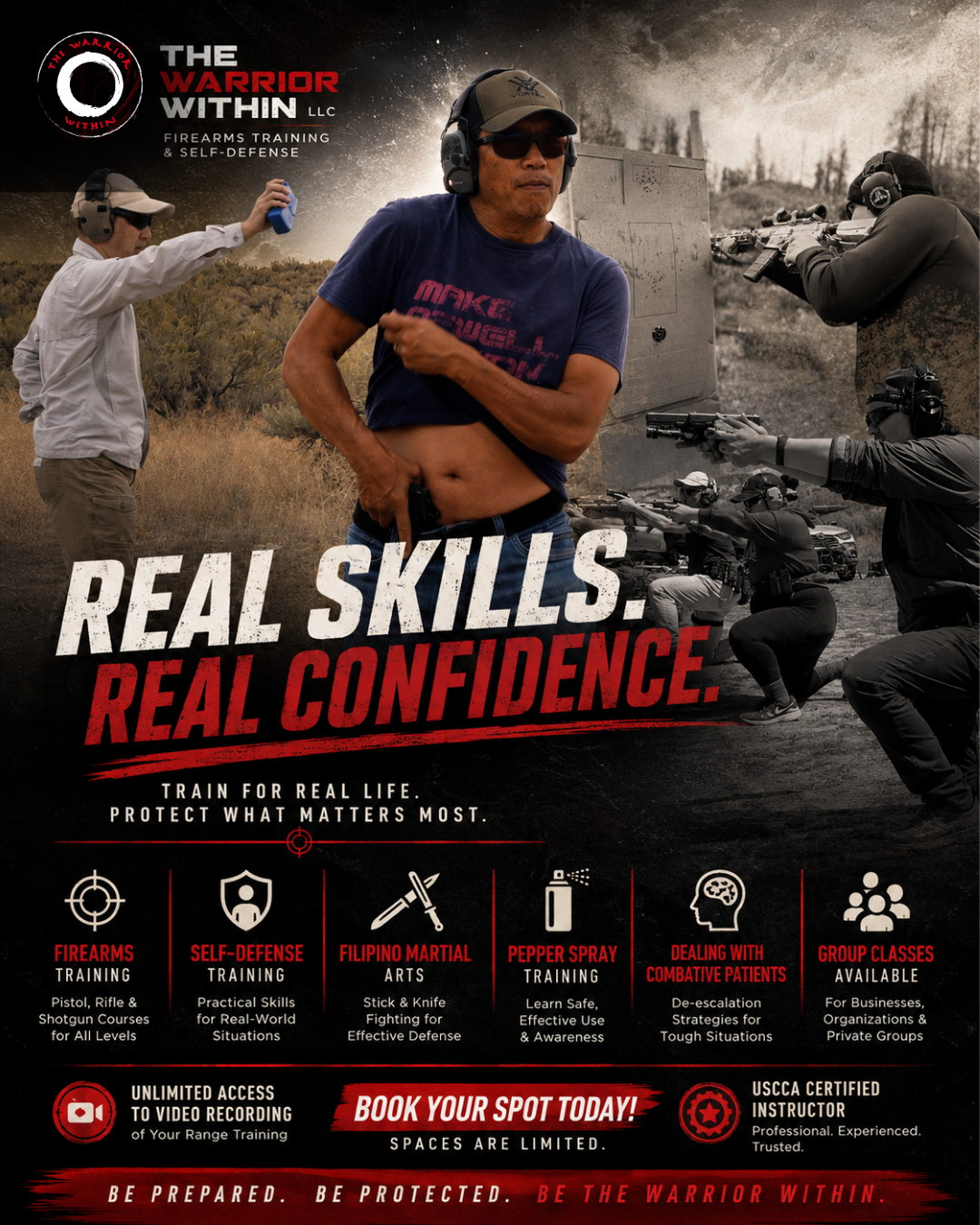
The Warrior Within also offers various firearms classes as well as private and semi-private Pistol, Rifle, and Shotgun training for students who want a more personalized experience.
How do you have a plan in the worst of circumstances? Train with purpose. Build responsible habits. Learn to make better decisions when they matter most.
This article is intended for general educational purposes and is not legal advice. Firearm laws and self-defense laws vary by jurisdiction. If you are involved in a self-defense incident, consult a licensed attorney in your area for legal guidance.